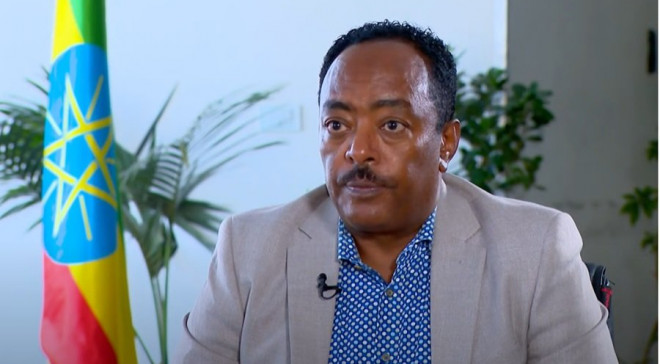
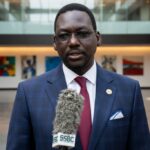
Redwan Hussien (Courtesy)
Addis Ababa, March 21, 2026
Savanna Radio Editorial
Media professionals in Ethiopia have been urged to uphold national unity and prioritize the country’s collective interests in their reporting, according to Redwan Hussein, Director-General of the National Intelligence and Security Service (NISS) and Chairman of the Ethiopian Media Authority Board. Speaking during the graduation ceremony of 36 journalists in Addis Ababa today, Redwan emphasized that responsible reporting plays a crucial role in consolidating peace and fostering cohesion across Ethiopia’s diverse communities. He noted that media practitioners bear a shared responsibility to strengthen public trust by promoting fact-based journalism and steering clear of divisive content. “The media must serve as a bridge for understanding and a tool for national development,” he remarked, calling on journalists to help shape constructive narratives that support Ethiopia’s reform journey, according to ENA.
The graduating journalists, drawn from both public and private media outlets, completed specialized training focused on media ethics, conflict-sensitive reporting, and digital media management. The program was designed to enhance professional standards and align media practices with national development priorities. Officials from the Ethiopian Media Authority commended the participants for their commitment to professional growth, reaffirming the Authority’s support for continued capacity-building programs across the media sector. The event concluded with an award presentation recognizing top-performing trainees who demonstrated excellence in ethical journalism and public service communication.
Redwan Hussein’s remarks, given his dual role in security and media regulation, sit at the center of a long‑running tension between “national unity” messaging and genuine press freedom in Ethiopia, in East Africa, and across the continent.
Ethiopia: unity language vs control
-
Ethiopia has a long history of governments using media as a tool of state control and “nation‑building,” from imperial and Derg eras through the EPRDF, with pre‑censorship and tight political oversight of content.
-
The current speech urging journalists to prioritize “national unity” and “national interest” echoes this tradition, especially worrying because it comes from the Director‑General of the National Intelligence and Security Service (NISS), an agency documented as involved in politically motivated arrests and intimidation of journalists.
-
The Ethiopian Media Authority Board itself has been criticized for politicization; parliament appointed senior government officials to the Board in breach of the country’s own media law, raising concerns that regulation is being used to shape coverage in favor of the ruling authorities.
Indicators of censorship and self‑censorship
-
Human Rights Watch and other organizations have documented patterns of harassment, prosecution under defamation and anti‑terror laws, and pressure that leaves many Ethiopian journalists choosing between self‑censorship and serious personal risk.
-
Recent assessments note renewed repression: independent outlets closed, journalists detained, and internet shutdowns used to limit access to information, all of which deepen structural censorship beyond any single speech.
-
In that context, official calls to avoid “divisive content” or to align with “national interest” can operate as coded warnings that critical reporting on security, conflict, or high‑level governance will be treated as a threat rather than legitimate journalism.
Regional East African picture
-
Ethiopia is part of a broader East African downturn, with the 2025 World Press Freedom Index placing Ethiopia, Rwanda, and Uganda in the “very serious” (red‑zone) category for media freedom, signaling entrenched legal and political constraints on independent reporting.
-
In neighboring countries, governments have similarly deployed security and “fake news” or cybercrime laws to police content and punish criticism, contributing to a climate where journalists face arrests, fines, and threats over sensitive political or human‑rights coverage.
-
For Savanna Radio’s audience, this means the Ethiopian case is not exceptional but emblematic of a regional model where security organs and media regulators are closely intertwined, and where “unity” rhetoric often coincides with shrinking civic space.
Continental trends and contrasts
-
Across Africa, press‑freedom scores remain low overall, with countries such as Eritrea and Egypt at the bottom of the continent’s press‑freedom index: no private media in some cases, heavy political control, and severe punishment for dissent.
-
At the same time, a smaller group of states—Mauritania, Namibia, Seychelles, South Africa, Ghana, and Côte d’Ivoire among them have registered comparatively stronger protections for independent media and rank far higher in global press‑freedom indices.
-
This divergence shows that appeals to “national interest” do not inevitably lead to censorship; where legal safeguards, independent regulators, and plural media ecosystems exist, unity language can coexist with robust scrutiny rather than silence.
Auditor’s conclusion for Savanna Radio
-
Taken in isolation, the graduation speech frames journalists as partners in peace and cohesion, but in Ethiopia’s institutional reality security‑linked media governance, prior patterns of repression, and low press‑freedom rankings the same language can function as soft justification for censorship and self‑censorship.
-
An auditor reading the article would therefore flag the need for balance: pairing official calls for unity with context on legal pressures, regulatory politicization, and regional press‑freedom data would better inform audiences about the structural power dynamics shaping what can and cannot be reported in Ethiopia and East Africa today.











Post comments (0)