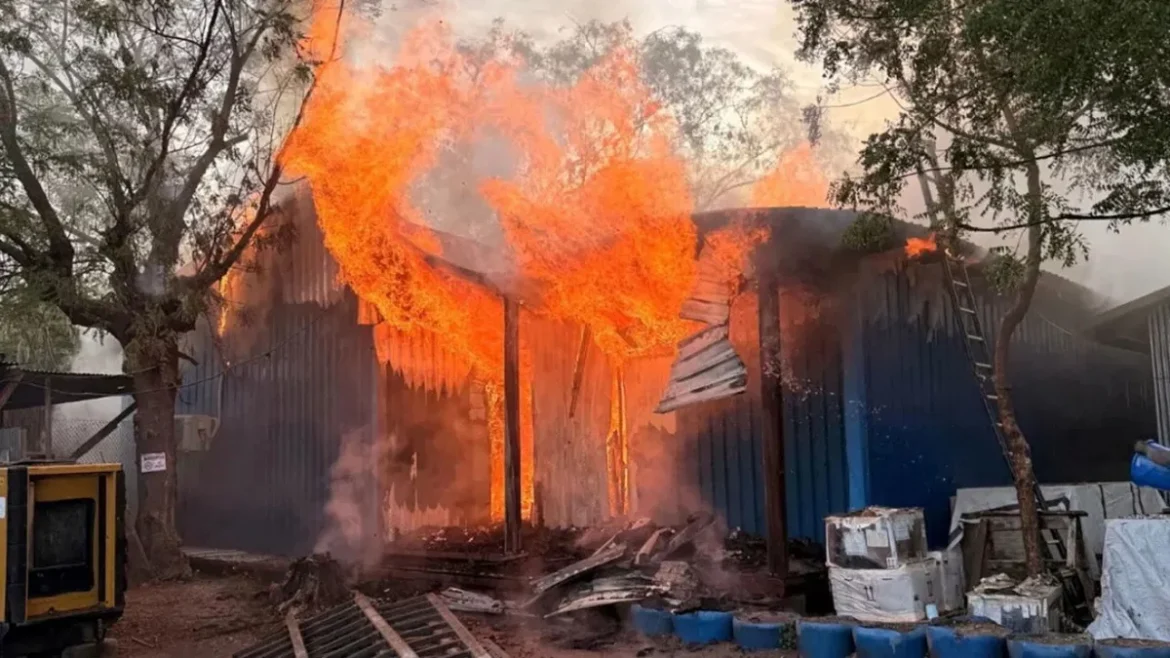
Hospital Bombed (File:KRDO)
Nairobi, March 6, 2026
Savanna Radio Newsroom
A newly released United Nations report has accused Ugandan troops of secretly helping South Sudan’s army carry out deadly airstrikes against opposition-held areas, in what investigators warn could fuel a slide back into full‑scale war. According to the UN Commission on Human Rights in South Sudan, Ugandan forces were deployed at Juba’s request and provided direct military support, including joint aerial operations that hit densely populated zones, killing and injuring civilians and destroying homes, markets, and vital infrastructure.
The report says the involvement of Uganda, a guarantor of South Sudan’s fragile peace deal, not only violates the UN arms embargo but also raises serious questions about regional neutrality and respect for international law. Human rights investigators describe a disturbing shift in tactics, with indiscriminate bombardments “predominantly affecting Nuer communities in opposition‑affiliated areas,” and warn that those attacks may amount to war crimes. Kampala and Juba have yet to publicly acknowledge the full extent of their military cooperation, but the UN is urging the Security Council and African regional bodies to demand explanations, enforce the arms embargo, and ensure that commanders on all sides are held accountable. For millions of ordinary South Sudanese already trapped in displacement, hunger, and fear, these revelations deepen concerns that the promise of peace is being replaced once again by the roar of warplanes in the sky.
Key Airstrike Incidents in UN Report
Aircraft dropped incendiary barrels on the village of Wunaliet, 15 km from Juba, setting homes ablaze and killing civilians, including a boy burned beyond recognition, while also targeting nearby opposition barracks. Flight tracking confirmed a Ugandan military turboprop circled the area after departing Uganda. The report notes multiple joint operations in opposition strongholds, with extensive planning and coordination between Ugandan and South Sudanese forces, though it does not list further specific dates or locations beyond Wunaliet. These strikes escalated amid Riek Machar’s arrest and clashes near the Ethiopian border.
Weapons Used in Nasir, Longechuk, and Ulang
Reports detail the use of improvised incendiary weapons, specifically barrel bombs containing highly flammable liquids (such as accelerants or chemicals like ethyl acetate), air-dropped from propeller-driven aircraft, including Ugandan turboprops.
-
Nasir (March 16 and 19, 2025): Incendiary barrels dropped on town and military garrison areas, killing at least 22 civilians, burning dozens of homes, and leaving burn scars visible in satellite imagery.
-
Longechuk (Mathiang village, March 16-19, 2025): Similar improvised incendiary devices caused at least 21 deaths, severe burns, and structure fires.
-
Ulang (Kuich area, March 21, 2025): Propeller aircraft dropped burning barrels, killing 15 (including 3 children), critically injuring 17 with horrific burns (“black skin coming out,” one victim burned to teeth).
- Old Fangak (MSF Hospital, May 3, 2025), South Sudanese government forces carried out an airstrike on a Médecins Sans Frontières (MSF) hospital and pharmacy in Old Fangak, Jonglei State, using two helicopter gunships that bombed the pharmacy at 4:30 a.m., incinerating it, then fired on the town for 30 minutes, followed by a drone strike on the nearby market at 7 a.m. The attack killed at least 7 civilians (including a 9-month-old child) and injured over 27 others, including patients, staff, and caregivers, completely destroying the facility that served 110,000 flood- and conflict-displaced residents. The UN Commission called it a potential war crime, noting the hospital’s coordinates had been shared with all conflict parties.
- Akobo County (e.g., Walgak town, Feb 4, 2026): Airstrikes hit amid looting; unconfirmed civilian casualties reported, with Save the Children facilities destroyed, cutting services for hundreds.
- Nyirol County (Nyamor, Maji payams): Intense fighting and airstrikes from Feb 3–7, 2026; MSF hospital in nearby Lankien struck Feb 3 (1 staff injured, warehouse destroyed); widespread displacement and infrastructure damage.
-
Uror County (Pieri Payam, Moto towns): Airstrikes and clashes Feb 3, 2026; homes/shops burned, markets looted; part of 105,400 displaced from county.
- Bentiu area and surrounding counties (early 2025–2026): Airstrikes amid clashes with SPLA-IO and allied Nuer youth militias, contributing to displacement and civilian casualties in Greater Upper Nile regions overlapping Unity.
- Mayom County (near Ruweng border, March 2026): Youth attacks linked to broader airstrike responses, though ground assaults predominated; aerial support reported in retaliatory operation
These weapons caused indiscriminate fires, miscarriages, and mass displacement, with eyewitnesses describing explosions followed by rapid ignition. According to ABC News, the UN Commission on Human Rights in South Sudan report and related Human Rights Watch documentation detail significant civilian harm from improvised incendiary barrel bombs in Upper Nile State.
Since late December 2025, South Sudanese government airstrikes targeted opposition areas in Jonglei State’s Akobo, Nyirol, and Uror counties amid clashes with SPLA-IO forces, displacing over 280,000 people and disrupting aidAccording to Relief Web, these attacks on health facilities (11+ since Dec 2025) and civilians exacerbated malnutrition, cholera risks, and access barriers for 250,000+ people. Some of these fit patterns of strikes on Nuer-populated opposition zones, exacerbating humanitarian crises with unverified civilian deaths and infrastructure damage.















Post comments (0)