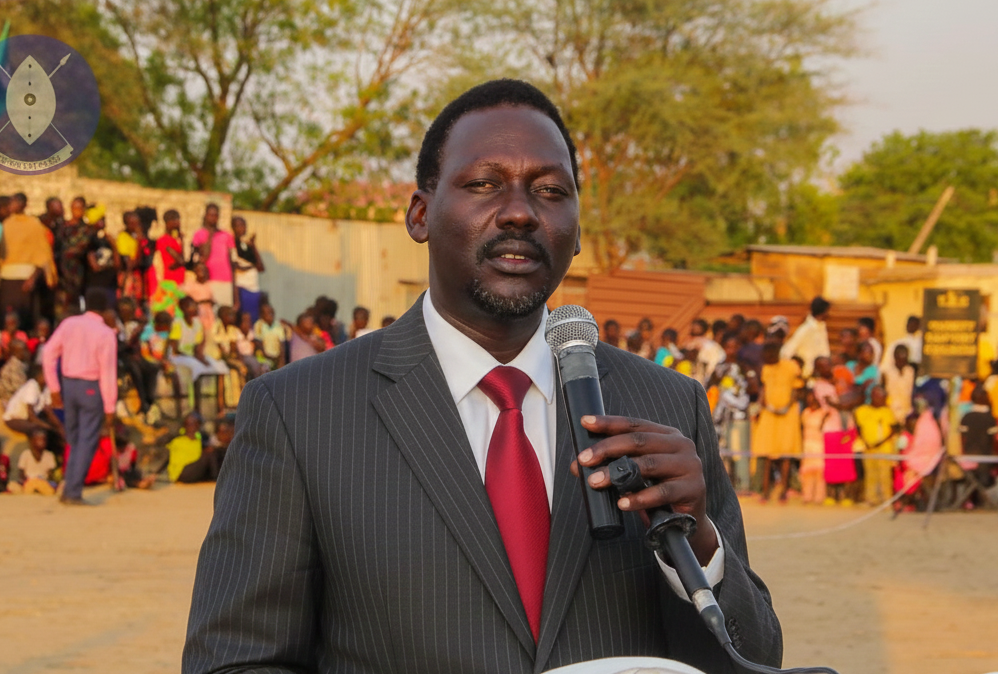
Hon. David Nyang
September 22, 2026
San Francisco, California
President Salva Kiir Mayardit’s dissolution of the Revitalized Transitional Government of National Unity (RTGoNU) is not merely an administrative change. It is a defining political moment for South Sudan. It marks the effective end of the governing arrangement established under the Revitalized Agreement on the Resolution of the Conflict in the Republic of South Sudan, commonly known as the R-ARCSS. For some, this development may be presented as a necessary transition toward elections. For others, it represents the conclusion of a peace process that, despite raising hope among millions of South Sudanese, was never fully implemented in the way its signatories promised. The dissolution should therefore compel the country to ask difficult but necessary questions: What happened to the peace agreement? Why did its institutions fail to deliver the promised transition? And what direction is South Sudan now taking?
I resigned because I became convinced that the peace agreement, as it was being implemented, was unlikely to endure. My decision was not based on opposition to peace. On the contrary, I supported every sincere effort to end war, protect civilians, reunite communities and create a democratic future for our nation. I resigned because a peace agreement without genuine political will, accountability and implementation becomes an agreement on paper, not a foundation for national stability.
A Peace Agreement Without Full Implementation
The 2018 peace agreement was intended to end conflict, rebuild trust among political forces and guide South Sudan toward a stable constitutional and democratic order. It established the RTGoNU as a transitional mechanism, not as a permanent government, and gave the country a roadmap toward elections, a permanent constitution, institutional reforms and a unified national army. But the essential pillars of that roadmap remained incomplete for too long. The permanent constitution-making process did not produce the national consensus required for a durable post-transition political settlement. Security-sector reform and the unification of forces advanced slowly and unevenly. The country also faced delays in preparing the institutions, laws, voter-registration systems, civic space and political conditions needed for credible elections. These shortcomings were not minor technical delays. They were the central obligations of the peace agreement. Without them, the transition could not reasonably be expected to generate the stability, legitimacy and reconciliation that South Sudanese citizens were promised. The agreement was designed as a package. Its political, security, constitutional, humanitarian and economic provisions were meant to support one another. When implementation became selective, when some offices were filled while core reforms remained unfinished, the peace agreement lost the balance that made it viable.
Why I Knew It Would Not Last
I did not conclude that the agreement would fail because South Sudanese people are incapable of peace. South Sudanese citizens have paid too high a price for conflict and continue to demonstrate a deep desire for security, dignity and a future for their children. My concern arose from what I observed in the conduct of the transition.
- First, there was an absence of urgency around the most consequential provisions of the agreement. A country cannot wait until the end of a transition to address the issues that determine whether the transition is credible: security, the rule of law, constitutional reform, public confidence and the ability of political actors to compete peacefully.
- Second, the institutions responsible for implementing the agreement did not consistently operate with the transparency and shared ownership needed in a genuine unity government. A peace agreement cannot be sustained when its partners do not have equal confidence in the process, equal access to decision-making or equal assurance that their commitments will be honored.
- Third, public expectations were repeatedly raised without being matched by implementation. Citizens heard promises of a unified army, a permanent constitution, electoral reforms, justice for victims and improved public services. Yet many communities continued to experience insecurity, economic hardship, displacement, flooding, violence and limited access to basic services.
- Fourth, the transition did not sufficiently restore public trust. Peace must be visible in the life of an ordinary citizen. It must mean safety on the road, food in the market, salaries for public servants, education for children, accessible health care and confidence that political disagreements will not again lead to armed confrontation. When people do not experience these benefits, they naturally begin to doubt the political process.
For these reasons, I believed that the agreement could not survive on declarations alone. It required implementation that was measurable, inclusive and accountable.
Why I Resigned?
I resigned because I could not continue to lend my name, position or public credibility to a process that, in my assessment, was moving away from the commitments that had been made to the people of South Sudan. Resignation is never an easy decision, particularly in a country emerging from conflict. It can be misunderstood as abandonment, disloyalty or political disagreement. But there are moments when remaining silent becomes more damaging than speaking honestly. My resignation was an act of conscience. I believed then, as I believe now, that South Sudan needed a peace process rooted in truth rather than convenience. The country needed leaders who would acknowledge failures, correct course and place the national interest above short-term political calculations. I did not resign from the cause of peace. I resigned from a political arrangement that, in practice, was failing to meet the standards required for a sustainable peace. There is an important difference between participating in a government and endorsing every decision made by that government. Public service requires integrity. When an institution or process departs from its stated purpose, those entrusted with public responsibility must be prepared to raise their concerns openly and responsibly.
The Implications of Dissolving the RTGoNU
The dissolution of the RTGoNU has immediate and long-term implications for South Sudan.
1. It Ends a Power-Sharing Framework
The RTGoNU was established as the executive expression of the peace agreement. Its dissolution signals the end of the formal power-sharing mechanism that brought previously competing parties into one transitional government. This may create an opportunity for a new political order. But it also removes a framework that, however imperfectly, provided channels for consultation, representation and conflict management among the principal parties to the agreement. Without an inclusive replacement arrangement, disagreements that were previously managed within government institutions may move back into political confrontation outside them. That risk must be taken seriously.
2. It Raises Questions About the Legal and Political Basis of the Transition
The peace agreement was intended to guide the country from conflict to a democratic constitutional order. When the transitional government is dissolved before all major benchmarks are completed, the country must clearly explain what legal and political framework will now govern the transition.
South Sudanese citizens deserve clarity on several matters:
-
What powers will the caretaker government exercise?
-
What limits will apply to caretaker officials?
-
Who will provide oversight over executive decisions?
-
What happens to unresolved provisions of the peace agreement?
-
How will political parties be guaranteed a fair and peaceful electoral environment?
-
What mechanism will protect civilians and prevent electoral violence?
These are not abstract questions. They concern the legitimacy of public authority, the protection of rights and the credibility of the electoral process.
3. It Could Deepen Political Exclusion
A caretaker government must not become a tool for excluding political competitors or consolidating authority without broad national consent. Its legitimate role should be limited: preserve essential services, maintain security under the law, support transparent electoral preparations and avoid irreversible policy decisions that belong to an elected government. If caretaker institutions are perceived as partisan, the election process will begin without public confidence. That would create political tension at precisely the time when the country needs calm, national dialogue and inclusive leadership.
4. It Tests the Credibility of the Elections
Elections can be a path to legitimacy only if they are credible, peaceful, inclusive and accepted by the people. Dissolving the RTGoNU does not, by itself, create the conditions for credible elections. The country still requires clear electoral laws and procedures, an impartial electoral management body, voter education, political freedom, protection for journalists and civil society, security arrangements that protect all citizens equally, and credible mechanisms for resolving election disputes. An election conducted without these safeguards may produce a winner, but it may not produce legitimacy or peace.
5. It Risks Leaving Unfinished Peace Tasks Behind
The dissolution must not be used as an excuse to abandon unimplemented provisions of the peace agreement. The needs that gave rise to the agreement have not disappeared. South Sudan still needs:
-
A people-driven permanent constitution.
-
Security-sector transformation and professional national institutions.
-
Justice, accountability and reconciliation for victims of conflict.
-
Sustainable return, resettlement and protection for displaced communities.
-
Transparent management of public resources.
-
Economic policies that reduce hardship and create opportunity.
-
A national political culture based on peaceful competition rather than armed power.
These are national responsibilities, not simply obligations to external partners or political parties.
A Call for a Responsible Transition
South Sudan stands at a crossroads. The country can use this moment to begin a more honest and inclusive political transition, or it can repeat the mistakes that have delayed peace and weakened public confidence. The government must clearly communicate the legal mandate, duration and limits of the caretaker administration. It must guarantee political freedoms, protect citizens and ensure that no community or political group is excluded from the national future.
Political parties must reject violence, hate speech and mobilization along ethnic lines. They must organize peacefully, present practical programs and recognize that public office is a responsibility, not an entitlement. Civil society, faith leaders, women, youth, traditional authorities, the media and the diaspora must also have space to contribute. South Sudan’s future cannot be decided only by a small group of political elites in Juba. It must be shaped by the voices of citizens from every state, county and community. International and regional partners should support South Sudanese-led solutions while insisting on genuine inclusion, transparent electoral preparations, civilian protection and accountability for commitments made.
The Choice Before Us
The end of the RTGoNU should not be treated as a routine political announcement. It is a warning and an opportunity. It is a warning because it demonstrates the danger of building peace without completing the institutions and reforms that make peace durable. It is an opportunity because it allows South Sudan to reflect honestly on what did not work and to choose a better path.
My decision to resign was guided by the belief that the country needed candor more than comfort. I believed the peace agreement could not last if its foundations were left incomplete. Recent events have reinforced that concern. Yet I remain hopeful. South Sudan is bigger than any agreement, any government and any individual leader. The people of South Sudan deserve a country governed by law, accountability, peaceful political competition and equal citizenship. The dissolution of the RTGoNU must not become the end of the dream of peace. It must become the beginning of a more credible, inclusive and lasting national settlement.
Hon. David Nyang is a South Sudanese public-affairs commentator, community leader and advocate for accountable governance, inclusive peace and democratic political reform. Drawing on his experience in public service and civic engagement, he writes on peace implementation, constitutional development, political inclusion, human rights and the future of South Sudan’s democratic institutions. His commentary emphasizes the need for transparency, rule of law, protection of civilians and citizen-centered leadership.















Moses Pekol on September 23, 2026
Very insightful observation! Well said.