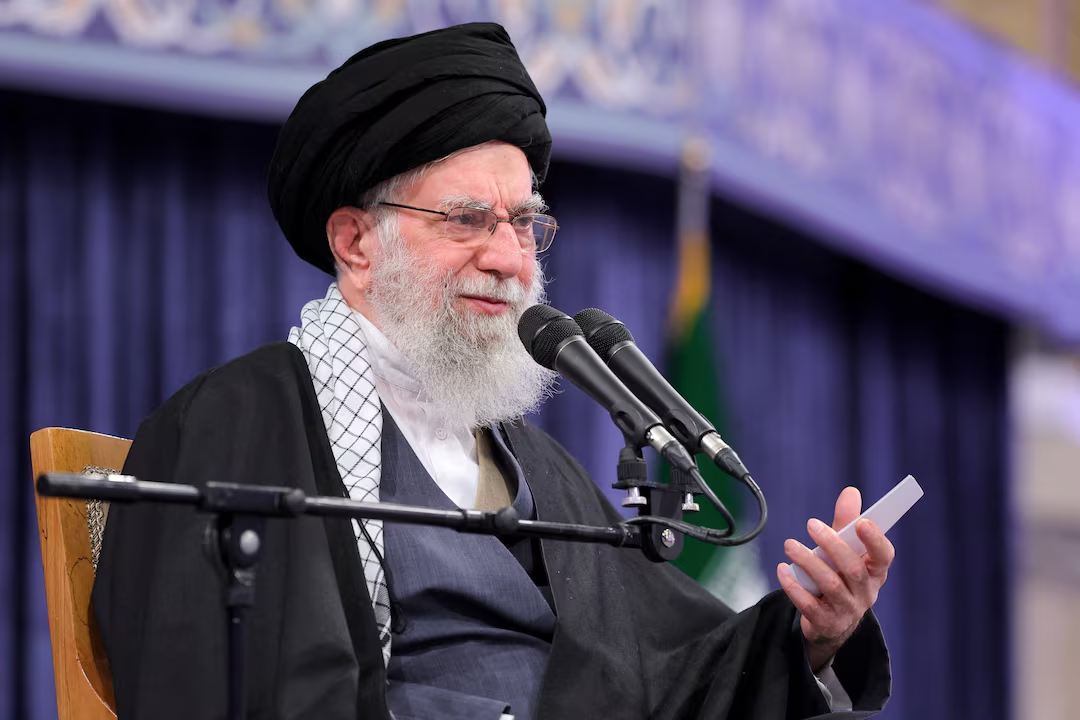
Iran’s Supreme Leader, Ayatollah Ali Khamenei (File: Reuters)
San Francisco, February 28, 2026
By Savanna Radio News Room
Israel and the United States on Saturday carried out large-scale coordinated strikes across Iran, targeting military infrastructure and leadership compounds, in what U.S. officials describe as “major combat operations.” Israeli officials say Ayatollah Ali Khamenei, Iran’s Supreme Leader since 1989, was killed when his offices and residence in Tehran were hit. However, Iranian state media and officials have not yet publicly confirmed his death. The operation, which began mid‑morning in Tehran, involved precision munitions launched from air, land, and sea, as well as one‑way attack drones, and is being described by U.S. Central Command as the largest regional concentration of American firepower in a generation.
Details of the strike
Israeli Prime Minister Benjamin Netanyahu said in a nationally televised address that Israeli and U.S. forces had struck Khamenei’s compound in the opening phase of the attack, declaring there were “growing signs that the tyrant is no longer alive.” Israeli officials, speaking on condition of anonymity, later told international media that Israel had confirmed Khamenei’s death and that his compound had been “reduced to rubble.”
U.S. President Donald Trump said the U.S. was engaged in “major combat operations” against Iran and told NBC News he believes reports of Khamenei’s death are “correct,” adding that “most” of Iran’s senior leadership had been eliminated in the strikes. Reports from Israeli and U.S. officials also indicate that senior commanders of Iran’s Revolutionary Guard and elements of its nuclear program were among those targeted, although full casualty figures remain unclear.
Iranian response and casualties
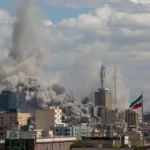
Iran has responded by launching missiles and drones toward Israel and U.S. military bases across the region, triggering exchanges of fire that continued into Saturday night. Explosions and air defense activity were reported in several Iranian cities, including around the Intelligence Ministry in northern Tehran, while Iranian media and local officials have spoken of heavy casualties, including at least 201 people killed and more than 700 injured nationwide, according to Iran’s Red Crescent cited by state outlets.
In southern Iran, a girls’ school was reported hit in the strikes, with at least 85 people killed and dozens more wounded, highlighting the growing humanitarian toll of the confrontation. The country has also been pushed into what monitoring group NetBlocks described as a near‑total internet blackout, complicating independent verification of battlefield claims and casualty numbers.
Uncertainty over succession and regional impact
If confirmed, Khamenei’s death would mark the assassination of only the second Supreme Leader of the Islamic Republic and leave Iran’s future leadership unclear, as he had no publicly designated successor. Analysts warn that the power vacuum could trigger an intense internal struggle involving the Revolutionary Guard, clerical establishment and political elites, even as Iran vows continued retaliation against Israel and the U.S.
Both Trump and Netanyahu have openly urged Iranians to “seize control” of their destiny and rise up against the Islamic leadership, raising questions over whether the strikes are aimed purely at degrading Iran’s military capacity or at catalyzing regime change. With tensions already elevated by failed nuclear talks and months of protests inside Iran, regional governments and international organizations are now calling for restraint amid fears that the confrontation could spiral into a broader Middle East war, Reuters reports.
Reactions and next steps
In Tehran, some residents were reported chanting and celebrating in certain neighborhoods, while official channels remained silent on Khamenei’s fate and the Foreign Ministry refrained from confirming his death. Neighboring states and global powers have begun emergency consultations, and there are growing calls for urgent diplomatic efforts to prevent further escalation. Governments with large expatriate and refugee communities from the region, including across Africa, are monitoring the situation closely for potential spillover effects on energy prices, shipping routes and regional security, according to CBS News.
Savanna Radio will continue to follow developments in Iran and the wider region, including official confirmation of Khamenei’s status, succession maneuvers in Tehran, and the impact of this confrontation on Middle Eastern and global stability.

















Post comments (0)