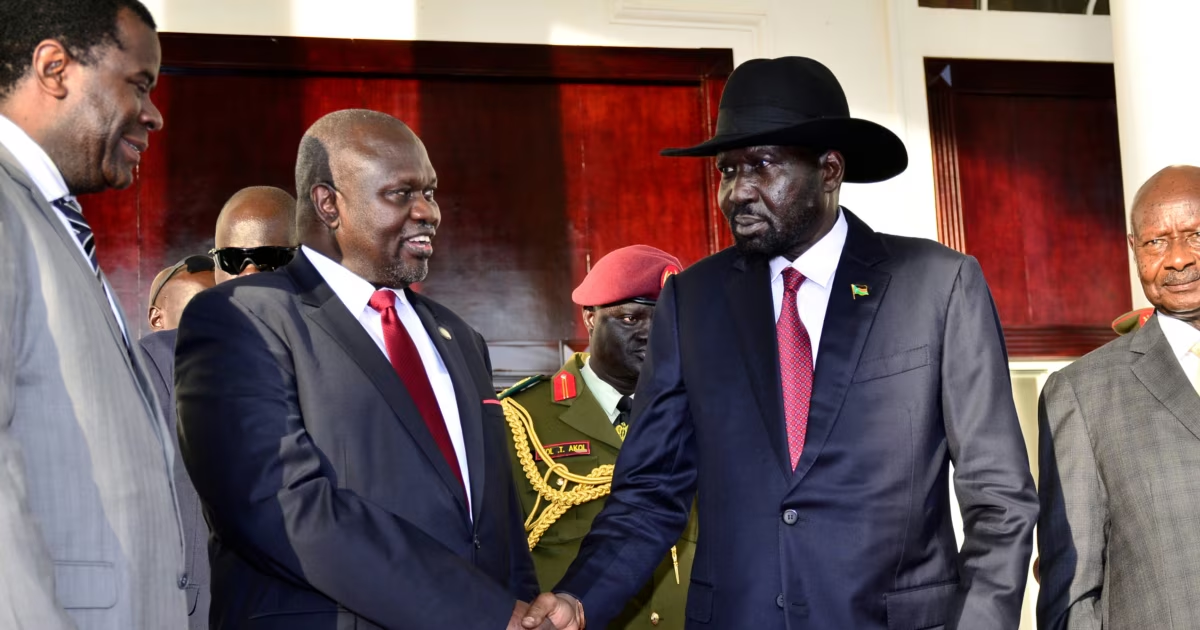
President Kiir Shaking Hands with Dr. Machar During Peace Efforts (File:VOA)
Washington DC, February 26, 2026
Savanna Radio News Desk
The United States has sharply condemned South Sudan’s latest peace maneuvers as “farcical,” criticizing Juba’s leadership for staging peace efforts while opposition leader Dr. Riek Machar remains under tight restrictions and effective detention.
The U.S. government has denounced South Sudan’s ongoing peace initiatives as “farcical and insincere,” accusing President Salva Kiir’s administration of using peace conferences and public declarations as a façade while opposition leader Dr. Riek Machar is held under severe movement restrictions and political captivity. In a strongly worded statement issued on Thursday, U.S. officials said it is impossible to speak of a genuine, inclusive peace process when one of the principal signatories and key stakeholders, Machar, is effectively detained and prevented from freely engaging in political activity, consultation, and travel.
The statement criticized “photo-op peace meetings, decrees and ceremonies” that are not backed by meaningful political freedoms, security guarantees, or concrete implementation of the peace agreement. According to the U.S., such actions erode trust, undermine national reconciliation, and send a clear message that power politics and coercion still dominate South Sudan’s transition.
Machar’s Detention at the Center of the Dispute
Dr. Riek Machar, First Vice President and principal opposition figure, has for months faced tight restrictions on his movement and political engagement, including limits on travel, public rallies, and independent consultations with his supporters and allied groups. Rights advocates and opposition voices say these restrictions amount to political detention, even if he is not formally held in a prison cell. They argue that:
-
Machar cannot freely meet his party structures, organize, or campaign.
-
Security organs closely monitor his activities and those of his allies.
-
Any dissenting voice from Machar’s camp is quickly harassed or silenced.
The U.S. has now openly linked this situation to the credibility of South Sudan’s entire peace architecture, warning that a peace deal cannot be meaningful when one party negotiates under duress.
‘Farcical’ Peace Efforts
U.S. officials accused Juba of trying to impress regional and international partners with a series of “peace conferences,” “national dialogues,” and public ceremonies, while the fundamental issues of political freedom, security arrangements, and constitutional reforms remain unresolved. Critics describe these initiatives as:
-
Stage-managed events designed to show progress on paper.
-
Processes where genuine opposition figures are excluded, intimidated, or tightly controlled.
-
Mechanisms to buy time and deflect international pressure without delivering real change.
The U.S. warning suggests that patience in Washington is wearing thin, especially as South Sudan inches toward promised elections with key opposition leaders constrained and civic space shrinking.
Implications for Peace and Elections
The American denunciation raises serious questions about the legitimacy of any upcoming electoral process and the long-term viability of the peace agreement. Analysts say:
-
Elections held while main opposition leaders are restricted or detained could be seen as fundamentally flawed.
-
Continued repression could trigger renewed instability or boycott from key stakeholders.
-
International partners may reassess their diplomatic, financial, and technical support if the peace process is seen as a mere performance.
The U.S. has called for the immediate lifting of restrictions on Machar, the opening of political space, and concrete steps to implement security arrangements and constitutional reforms envisaged in the peace deal.
Juba’s Likely Response
The government in Juba is expected to dismiss the U.S. criticism as interference in its internal affairs, insisting that any measures taken against opposition figures are for national security and stability. Officials may argue that:
-
The peace agreement is being implemented gradually and in stages.
-
Machar and his camp remain part of the unity government and are not excluded.
-
Any security precautions around Machar are necessary given the country’s fragile context.
However, the public and strong language used by Washington suggests growing impatience and indicates that South Sudan’s leadership could face increased diplomatic isolation, targeted measures, or renewed pressure in regional and international forums if the situation remains unchanged.
What to Watch
Savanna Radio will monitor:
-
Any formal response from South Sudan’s Ministry of Foreign Affairs or the presidency to the U.S. statement.
-
Reactions from Machar’s camp and other opposition groups.
-
Positions taken by IGAD, the African Union, and neighboring states in light of Washington’s denunciation.
-
Whether there are any practical steps on the ground to ease restrictions on Machar and to open political space ahead of the planned elections.
Auditor’s Analysis on the Trial of Dr. Riek Machar and SPLM/A‑IO Leaders
From an oversight and accountability perspective, the ongoing proceedings against Dr. Riek Machar and other SPLM/A‑IO leaders display multiple features that justify their description as a sham trial, rather than a credible pursuit of justice. The defendants face highly politicized charges, including treason, murder, terrorism, and crimes against humanity, that by the terms of the 2018 peace agreement should be adjudicated by an African Union–mandated Hybrid Court, not by a special tribunal created and staffed unilaterally by the executive, which suggests forum shopping for a pliant venue. Their ability to mount a defence is further undermined by Machar’s effective house arrest, the detention of co‑accused by National Security, and heavily securitized, restricted court sessions that limit access for the public, independent media, and even some relatives, eroding transparency and basic fair‑trial guarantees. The political timing of the case at a delicate stage of the transition, with key decisions on elections, security, and constitutional reform pending means the trial functions in practice as a tool to weaken a principal peace partner, intimidate its base, and shift the balance of power in the peace process. Coupled with the apparent absence of comparable prosecutions against other actors implicated in similar wartime abuses, the proceedings reflect selective, one‑sided justice. Taken together, these elements indicate that the trial is being instrumentalized to neutralize political opponents and reshape the political landscape, rather than to advance impartial accountability, reconciliation, and rule of law.
For now, the U.S. message is clear: peace efforts without genuine freedom and inclusion of all key actors, especially Machar, will be treated as a political show, not a path to real peace.












Post comments (0)