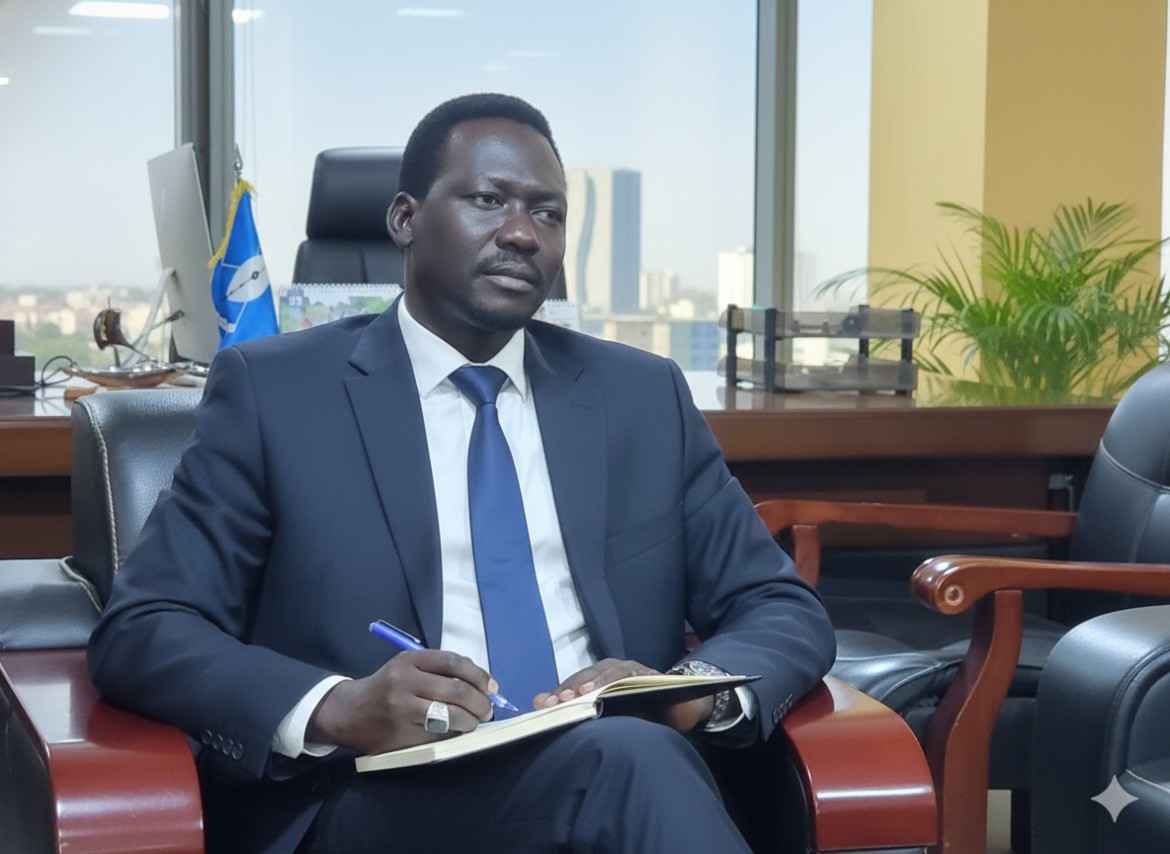
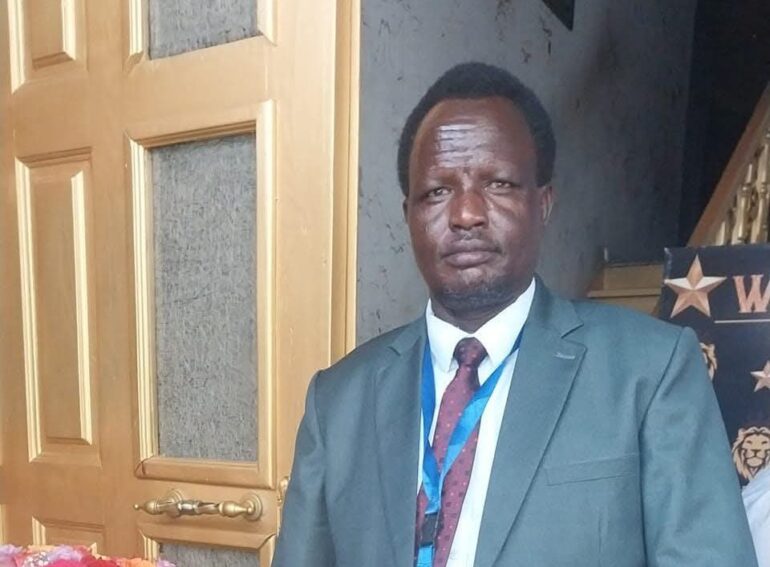
Hon. David Nyang K.
San Francisco, February 24, 2026
By Hon. David Nyang
The people of South Sudan have barely begun to understand the full cost of the so‑called “Oil for Roads” deals, yet the regime in Juba has already engineered a new scheme: “Gold for Roads.” Once again, the promise is infrastructure and development; once again, the outcome is theft, secrecy, and betrayal. This is not policy. This is organized looting dressed up as government.
For years, our oil wealth has been mortgaged away through opaque contracts that no citizen has seen and no parliament has meaningfully approved. Those oil‑backed arrangements were marketed as a patriotic shortcut to build highways, bridges, and modern transport corridors. Instead, we got a handful of cosmetic projects, half‑done or already crumbling, while billions of dollars vanished into offshore accounts and the pockets of a tiny elite. Civil servants went unpaid, teachers and doctors abandoned their posts out of sheer desperation, and soldiers, the very individuals the regime claims to “support” were left begging in the streets. The “Oil for Roads” saga robbed our nation twice: first of the oil itself, and second of the roads we were promised.
Now, in the same spirit of impunity, the Salva Kiir regime is turning to our gold. South Sudan is rich in mineral resources, especially in areas already fragile from conflict and displacement. Rather than using this wealth transparently to stabilize the economy, pay salaries, and support basic services, the regime has quietly struck deals that pledge our gold production in exchange for infrastructure that never materializes, or arrives at a fraction of its stated value. The pattern is painfully familiar: uncompetitive contracts, middlemen with ties to power, inflated project costs, and no independent oversight. Where oil was once the main artery of theft, gold is fast becoming the new lifeline of the cartel at the top.
The consequences are brutal and immediate. When our oil is mortgaged and our gold is pledged, the state has nothing left to sustain its basic responsibilities. No money for civil servants, no funds for schools, hospitals, or clean water, no budget for maintaining the very roads that are supposedly being built through these arrangements. Instead of a functioning public sector, we are left with a hollowed‑out state, a political class that feeds on predation, and a population trapped in poverty and frustration. The promise was “roads,” but the reality is a nation that cannot pay its own workers and still has no roads.
These scams are not merely financial missteps, they are a direct attack on our sovereignty. When a regime mortgages oil and gold through secretive deals, it is effectively surrendering control of national assets for generations. It locks future governments, and future generations, into obligations they did not choose and cannot easily escape. That is how a young nation becomes a hostage to its own corrupt rulers and to foreign interests willing to profit from their greed. Sovereignty is not only about flags and borders; it is about who controls the resources under our soil and in whose name those resources are used.
Let us be clear: there is nothing inherently wrong with using natural resources to finance infrastructure. The problem lies in how it is done and who benefits. In a responsible system, resource‑backed infrastructure would be governed by transparent laws, debated in parliament, disclosed to the public, audited by independent bodies, and subject to strict anti‑corruption safeguards. Contracts would be competitive, project costs realistic, and payments carefully tracked. In South Sudan today, the exact opposite is true. Deals are negotiated in darkness, details are guarded as state secrets, and the only constant is that the public pays the price while the politically connected grow richer.
The Gold‑for‑Road scam exposes the moral bankruptcy of a regime that has learned nothing from past scandals and fears no accountability. It shows a government that would rather pledge the country’s future than confront its own corruption. It reveals, once again, that the priority in Juba is not development, but personal enrichment and political survival. Those who dare to question these schemes are dismissed as traitors, intimidated, or silenced. Meanwhile, ordinary citizens watch, powerless, as the wealth that could transform their lives is converted into luxury homes abroad, private jets, and the lifestyle of a ruling class divorced from the reality of its own people.
What is to be done? First, the Gold‑for‑Road and Oil‑for‑Road agreements must be fully exposed. Every contract, every payment, every partner must be brought into the light. No more hiding behind “National Security” or “Confidentiality.” These are public resources; the public has an absolute right to know who is profiting from them and on what terms. Second, there must be a rigorous, independent investigation into all resource‑backed infrastructure deals, with the power to recommend prosecutions and asset recovery, both at home and abroad. Those who have stolen from the people must face justice, not promotion.
Third, South Sudan must adopt a new framework for managing natural resources, one rooted in transparency, parliamentary oversight, and direct benefit to citizens. Oil and gold revenues must be channeled into paying civil servants on time, funding healthcare and education, and building real, verifiable infrastructure that can be inspected, audited, and maintained. Future contracts must be open to public scrutiny, with clear penalties for corruption and mismanagement. This is not a technical luxury; it is a survival requirement for a country that has been systematically looted under the cover of “development.”
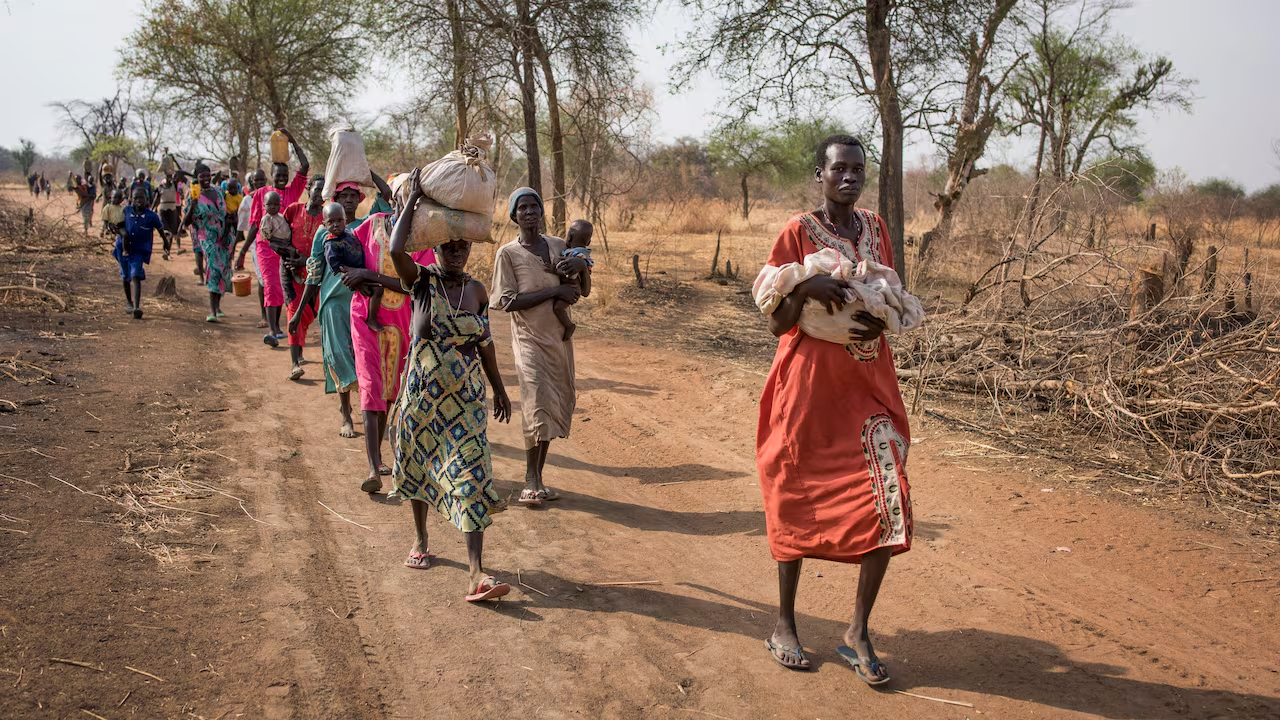
Finally, and most importantly, the people of South Sudan must refuse to be silent. The Gold‑for‑Road scam is not an abstract policy issue. It is the reason a nurse goes unpaid for months. It is why a teacher abandons a classroom. It is why a child walks barefoot for miles on a dusty path that should have been a paved road years ago. It is why a whole generation grows up knowing their country is rich, yet living as if they are among the poorest on earth. Silence in the face of such injustice is complicity.
The Kiir regime has turned statecraft into state theft, using oil and now gold as tools to entrench its power and deepen the suffering of our people. South Sudanese everywhere, in the villages, in the towns, in the diaspora, must recognize that these scams are not isolated incidents but part of a deliberate system of exploitation. That system must end.
We deserve a country where our resources are a blessing, not a curse; where wealth builds roads, schools, and hospitals, not palaces and private accounts; where civil servants are paid, services function, and the public good outweighs private greed. Until we confront and dismantle the Gold‑for‑Road and Oil‑for‑Road racket, South Sudan will remain a rich land with poor people, governed by a regime that feeds on their misery. The time to demand accountability is now, before the last barrel of oil is mortgaged, the last ounce of gold is pledged, and there is nothing left for the children whose future has already been stolen too many times.
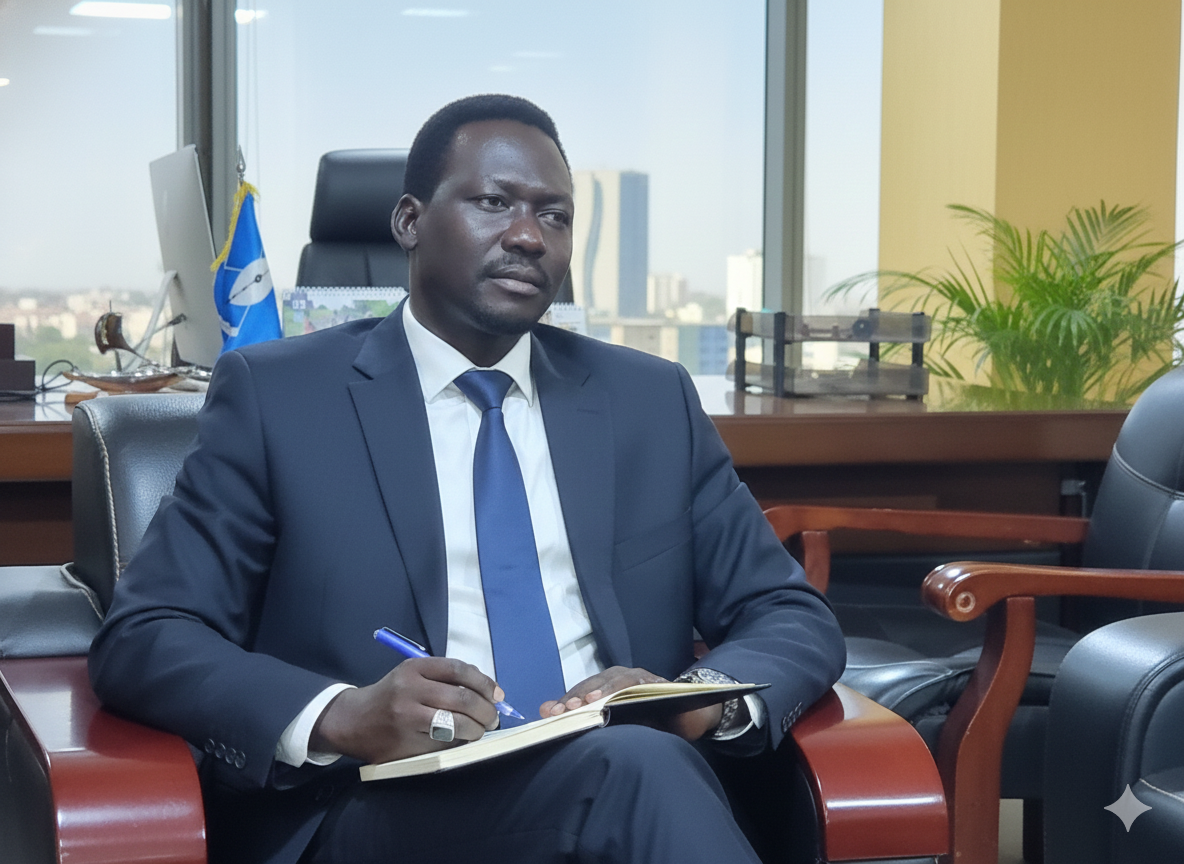
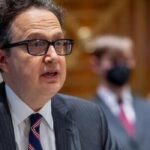
Hon. David Nyang’s recent resignation is itself an act of protest, underscoring his uncompromising stance against systemic corruption and abusive, unaccountable governance. By stepping down rather than legitimizing a regime he views as predatory and deceitful, he aligns himself openly with the citizens robbed of their resources, salaries, and basic services. His stand affirms that public office is a trust, not a license for theft, and that true leadership sometimes means relinquishing power to expose injustice and demand a transparent, people‑centered government.
Disclaimer:
The opinions expressed in the preceding article represent the individual viewpoint of the author and do not reflect the official position, editorial stance, or views of Savanna Radio. Our platform is committed to presenting diverse perspectives for public discourse.








Post comments (0)