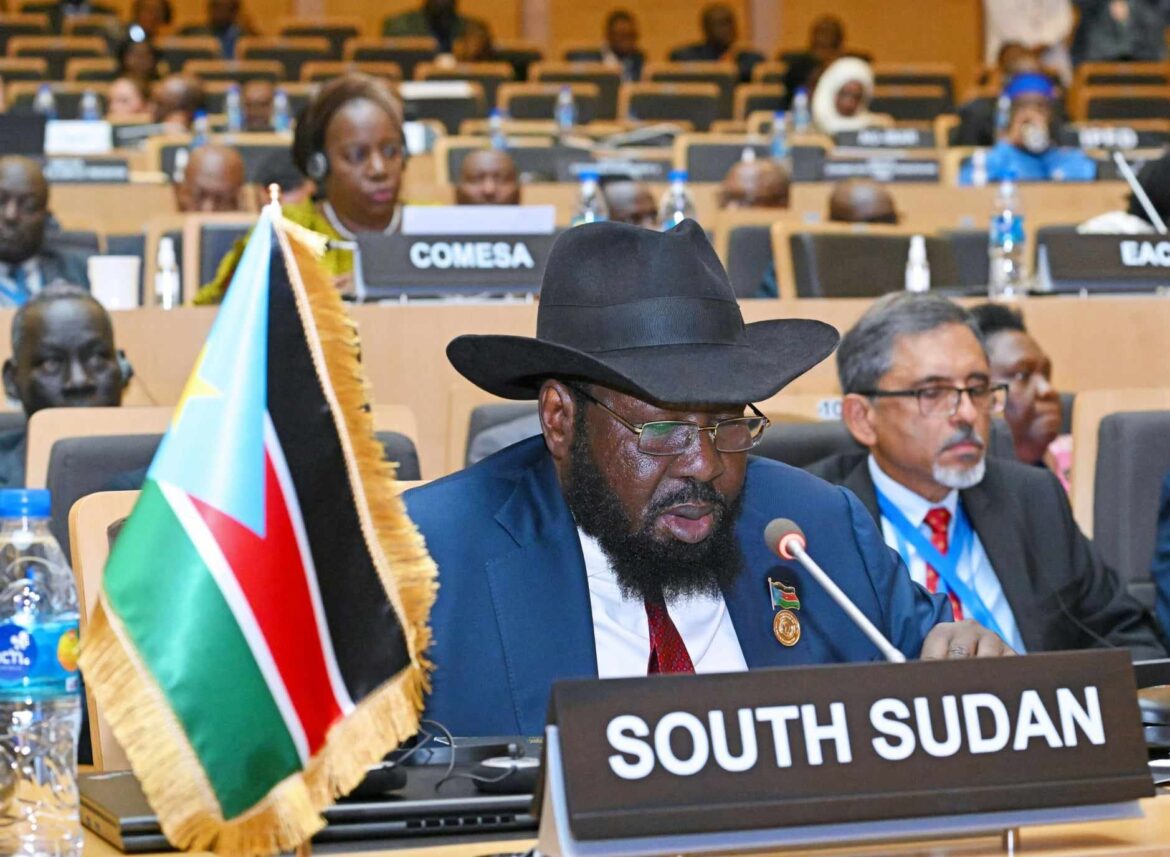
President Salva Kiir Mayardit (File:AU)
San Francisco, February 21, 2026
By Kennedy Odhiambo Onjweru
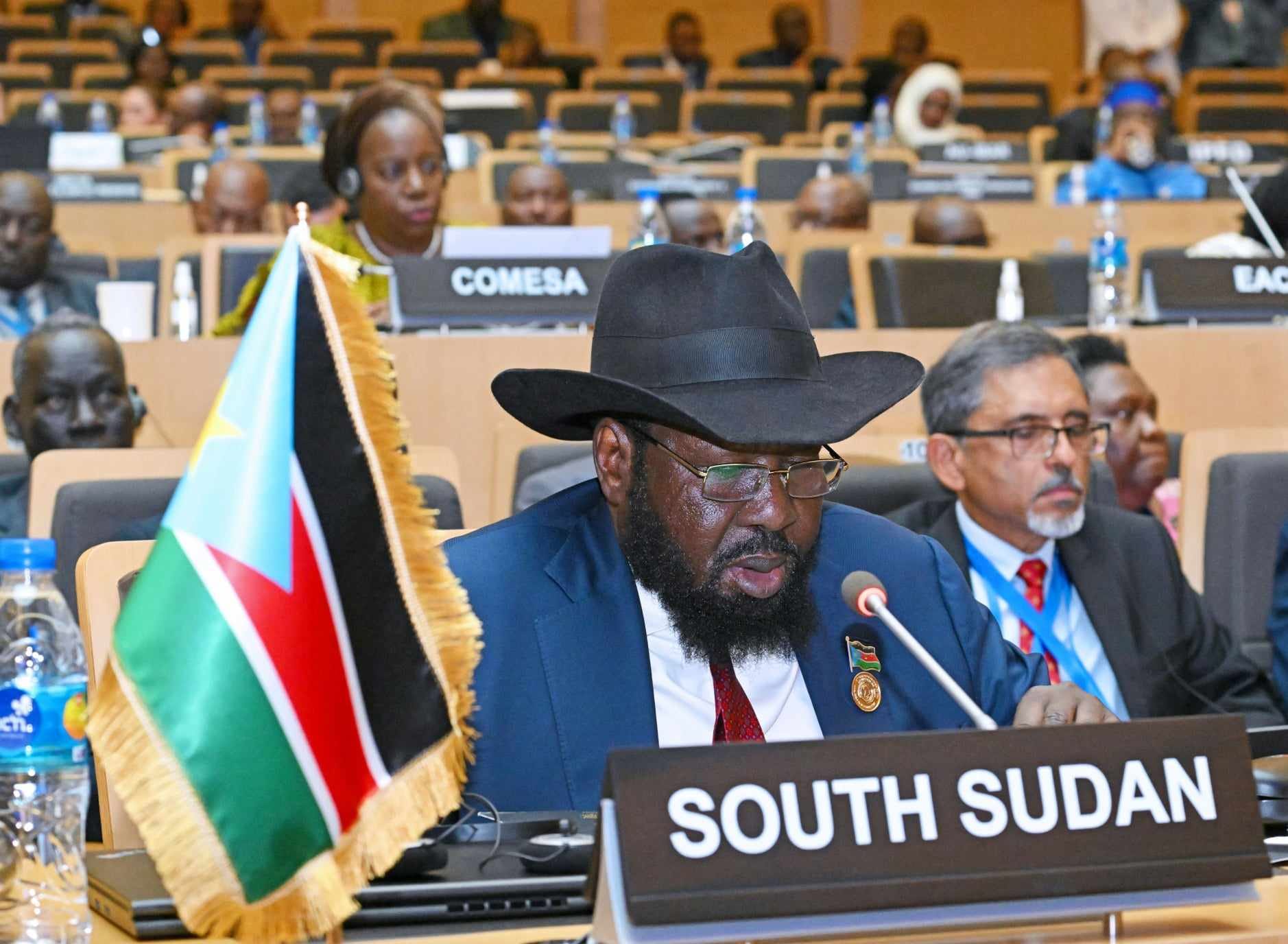
“The Emperor’s New Clothes”; often referred to as “The King” is Naked” by Danish author, Hans Christian Andersen, a story is told about a king who was naked but his servants and body- guards were too afraid to tell him the truth. It had to take the intervention of a minor to tell the king not what he wanted to hear, but what he needed to hear. Looking at this analogy, did it need to take the “King” Salva Kiir Mayardit to be displayed in Addis Ababa to show “the King” and that things are not well in the palace? A day following the widely shared videos of the President Salva Kiir struggling to read the embarrassing speech at the 39 th Ordinary Session of Africa Union Summit, I came across a post in one of the popular South Sudanese “political” social media, Sixty 4 Tribes Press suggesting that the immediate former Dr. Benjamin Bol Mel was the only true friend of the president because he wouldn’t have allowed him to attend the AU meeting only to be ridiculed and humiliated in Addis Ababa.
In the same post, the writer tends to blame Kiir’s daughter, Adut and three Ministers, Africano Mande Gadima, Monday Semaya Kumba and Elia Lomuro for exposing the visibly ailing and infirm president to the whole world. I totally disagreed with the writer, instead I hold the view that people surrounding the president are culpable and stand to be condemned for not only being dishonest but also caring less about the nation and the citizens. The presidential handlers must quickly realize the office of the president is a public trust which provides citizens the right to know the health situation of their president especially at this critical moment in the country. In many occasions while they are treated with a level of reverence, authority, and personality cult devotion that mirrors the status of a deity, it is important to note that presidents or leaders of this stature are mortal and susceptible to sickness and death. They remain as vulnerable to mortality as any other human being, as we have witnessed numerous presidents having fallen ill or passed away while in office. The best example is Dr. John Garang who died in a helicopter crash in 2005.
However, in many African countries, including this obvious case of South Sudan, powerful individuals within the presidency would often conceal a president’s failing health to maintain their proximity to power, control state resources, and prevent immediate (potential) political instability or transitions that might disadvantage them. It is not always to the advantage of the nations.
In progressive societies, citizens always demand to know the health condition of their leaders so as to build confidence in the leader’s fitness and ability to fulfill demanding duties, and maintain trust in government operations. Because South Sudan is not a monarch and knowing death inevitable, transparency of President’s health condition allows the country to initiate smooth succession process in case he is unable to perform constitutional duties as evident in Addis Ababa.
In the US for instance while there is no law or formal constitutional requirement mandating the disclosure of a president’s medical conditions, the health of a president is a matter of intense public interest and national security. Traditionally, presidential candidates are expected to disclose their health records so to assure voters they are physically and mentally capable of serving a full four-year term. At a time when contemplating the death of president was treasonable, illness and death of Kenya’s founding President, Mzee Jomo Kenyatta, was heavily restricted and manipulated by a close circle of aides and politicians, primarily to manage succession and maintain their power. Kenyatta died on August 22, 1978, but the secrecy surrounding his final days was
part of a long-standing pattern of hiding his frail health. The intense secrecy of Kenyatta’s health and death, created a significant security risk and a chaotic power struggle behind closed doors. Because he had not publicly named a successor, his passing plunged the country into a prolonged period of extreme vulnerability, with key political figures navigating a constitutional crisis and fears of a close allies attempting to block then Vice President Daniel arap Moi from ascending to power.
Throughout history, several presidents have suffered from severe, often hidden, serious illnesses, leading to their close aides and family members to rule the governments on their behalf. Pundit argue that Adut Salva Kiir, the daughter of the President is seen to be in control of the presidency and government. Adut’s appointment as the Senior Presidential Envoy for Special Programs on August 20, 2025, was simply to elevate her to a central role in controlling state resources and influence. Since her appointment Adut, has consolidated significant power within the government. Critics accuse her of perpetuating nepotism and tightening the family’s control over national wealth, including alleged involvement in the mining sector. We recount countries that allow ailing presidents to rule through their family members and close aides is a common feature in authoritarian regimes, often leading to intense security risks, corruption, and chaotic, violent, or illegitimate succession crises. This practice frequently turns public institutions into private, “dynastic” enterprises, undermining state stability.
At a time when South Sudan is faced by grave governance issues, the public appearances in Addis Ababa where the President was observed unable to read a written speech, walking with a weak gait, requiring significant assistance, and using a walking stick should pose serious concern to both sane political leaders and the citizens at large. It shouldn’t be business as usual to the leadership of the country.
Disclaimer:
The opinions expressed in the preceding article represent the individual viewpoint of the author and do not reflect the official position, editorial stance, or views of Savanna Radio. Our platform is committed to presenting diverse perspectives for public discourse.














Post comments (0)