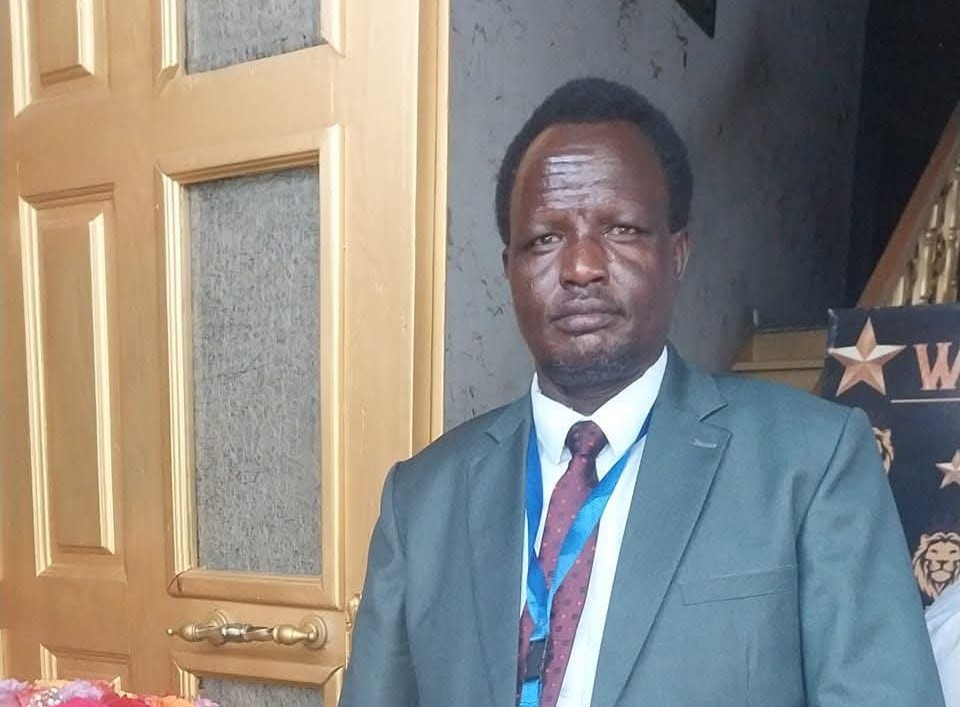
Cde. Dak Bol Deng
Addis Ababa, February 20, 2026
By Cde. Dak Bol Deng, Former Government Official
As diplomacy has recently initiated a multiplicity of talks during and after the African Union summit held in Addis Ababa, the regional and international mediators have shifted their
diplomatic weight between capitals, gains, and the political monopoly of South Sudan. This tension forces me to ask myself this fundamental question that demands urgent consideration:
Does the incremental normalization of South Sudan’s protracted crisis serve the interests of the South Sudanese people, or merely serve the interests of those who profit from its perpetuation?
This article argues that the current approach to peacemaking, characterized by serial negotiations, elite-centric retreats, and the absence of meaningful enforcement mechanisms, has
transformed mass suffering from an unacceptable reality into a managed condition against which political processes unfold. Beyond the rhetoric of commitment to the Revitalized Agreement on
the Resolution of the Conflict in South Sudan (R-ARCSS) lies a more troubling pattern: the systematic extraction of resources exploitation through peace industry machinery, the reinforcement of armed mobilization as a pathway to political inclusion, and the progressive erosion of civic hope among a population that has endured nearly two decades of independence marked not by liberation’s promise, but by sustained dispossession. The prevailing of this discourse on South Sudan frequently characterizes the nation as standing on the brink. This situation is a framing that conveys urgent thought to many observers in diplomatic chanceries, regional leaders, and diaspora communities. Yet for millions of South Sudanese, this formulation subtly misrepresents the empirical reality. The brink is not an approaching precipice; it is the very ground beneath their feet. The crisis is not impending but ambient, caused by structural factors, and experienced continuously in the multiplication of daily existence. If the diplomatic processes become recurring and spectacles detached from meaningful enforcement mechanisms, then the risk is always likely to extend beyond control to achieve lasting peace. The processes also encompass the gradual normalization of mass suffering as an acceptable background condition, or the transformation of catastrophe into managed stagnation.
This essay interrogates the political economy of peacemaking in South Sudan, examining how serial negotiations, elite retreats, and regional initiatives have paradoxically contributed to crisis
perpetuation rather than resolution. To understand the current impasse, one must recognize that peace negotiations on South Sudan have become a genuine industry, not merely for international
consultants or mediators, but for a complex web of regional actors whose engagement increasingly reflects extractive logic rather than transformative ambition. The recent proliferation of high-level retreats and mediation forums, ostensibly designed indirectly not to support the R-ARCSS framework, but reveal a troubling pattern for South Sudanese people. Consider the concurrent initiatives: the proposed resumption of the Tumaini process in Nairobi and the SPLM reunification efforts in South Africa. This trick clicks too many South Sudanese minds to experience a political gain in Juba, not to serve the interests of South Sudanese ordinary citizens as we think. Each program was presented as a pathway to South Sudan stability, but most of these two programs have lacked their genuine processes. Yes, a more critical examination suggests these processes have become detached from the root causes that can continue to generate violence and displacement. South Africa’s current intensive efforts to reunite the SPLM warrant particular scrutiny. To make many people worry is that South African diplomatic efforts seem to lack emphasis on institutional cohesion and movement unity because their focus is to win the Jonglei State unexploding oil. The simultaneous negotiation over access to Jonglei State’s oil resources, assets that represent the primary source of revenue for any political formation controlling the state, suggests that economic considerations may be as influential as stated commitments to peace.The fundamental questions remain unasked: Why have previous reunification efforts failed? What guarantees exist that this process will address the systematic targeting of specific communities, particularly the Nuer civilians and other non-Dinka populations, by state-aligned forces? Without confronting these uncomfortable truths, reunification risks becoming a mechanism for consolidating control over extraction rather than establishing accountability. Similarly, Kenya’s determined pursuit of the Tumaini Initiative demands critical examination. Why does Nairobi maintain such a steadfast commitment to this particular framework, even as its relationship to the existing R-ARCSS architecture remains ambiguous?
The answer may lie less in altruistic regional leadership than in the predictable flow of resources that peace processes may generate. When facilitators receive salaries equivalent to twenty-four
months of South Sudanese civil servant compensation, funds that would otherwise support education, healthcare, and basic services among the South Sudanese people, the incentives for
structuring mediation efforts become clear and much more interesting to earn that money while ordinary South Sudanese stand for 24 months without salaries. Many informed observers
recognized from the Tumaini Initiative’s inception that its primary function was not to diagnose and address the conflict’s root causes, but to facilitate the reintegration of pro-SPLM cadres into Juba’s political machinery. The implicit bargain offers positions in exchange for allegiance, effectively replacing the R-ARCSS framework with an arrangement that benefits political elites in both Nairobi and Juba while leaving ordinary citizens to continue their precarious existence. This raises a fundamental question that regional leaders have thus far evaded: Why does Kenya’s peace initiative proceed without any discernible effort to define, analyze, or address the structural drivers of South Sudan’s conflict? The answer requires a historical perspective. The 2018 R-ARCSS represented, in its original conception, a genuinely comprehensive framework. Its protocols were articulated with technical precision. Its provisions addressed the multiplicity of issues, security arrangements, transitional justice, resource allocation, and constitutional reform that any durable settlement must confront. The process for identifying root causes, while imperfect, demonstrated relevance to the suffering experienced across communities. Yes, the core obstacle to R-ARCSS implementation has never been technical inadequacy. The agreement’s provisions remain largely unfulfilled not because they are flawed, but because the country’s leadership, particularly within President Salva Kiir’s inner circle, lacks genuine political will to transform paper commitments into lived reality. This absence of will, combined with systematic resource extraction centered in Juba, has produced a paradoxical situation that has led the regional and international actors to express their confusion about how to proceed while simultaneously participating in extraction through the very mechanisms designed to build peace. When political will remains absent and enforcement mechanisms remain unavailable, diplomatic processes become exercises in managing rather than resolving conflict. The fundamental danger is that the crisis becomes normalized, embedded in the political economy as a functional system from which key actors derive sustained benefit.
Since the outbreak of civil war in December 2013, more than four million South Sudanese have been displaced from their homes. This figure, while staggering, requires disaggregation to reveal
its full meaning. Approximately two million individuals remain internally displaced, sheltering in flood-prone areas or former United Nations Protection of Civilians sites, while spaces never
designed for protracted habitation. On the other hand, an additional 2.3 million people have sought refuge in neighboring states, Sudan, Uganda, Ethiopia, DRC, CAR, and Kenya, where
they navigate the precarious legal status and social marginalization that characterizes refugee existence throughout the region for decades. These displacements cannot be characterized as
temporary disruptions. For many, displacement has become a permanent condition. Numerous children have spent their formative developmental years in camp environments, disconnected
from their ancestral land, denied their consistent educational opportunities, and separated from the communal continuity that sustains cultural identity across generations. While citizenship exists de jure, an entire generation is effectively growing up without the stability that renders nationalism meaningful in practice. Currently, over seven million people face acute food insecurity across the country and in refugee camps in the region. Although climatic shocks contribute to this vulnerability, hunger in South Sudan is fundamentally political in origin. Agricultural cycles have collapsed under the weight of sustained displacement. Cattle raiding and scorched-earth military tactics have systematically stripped the many communities in South Sudan of their ability to be productive communities. The bureaucratic impediments and pervasive insecurity, on the other hand, routinely obstruct humanitarian access to populations in need. At various junctures, hunger has been instrumentally deployed as a weapon in localized conflicts or tolerated as collateral damage within broader political and military confrontation strategic plans.
South Sudanese families, particularly those in rural areas, now survive on foraged wild fruits and emergency rations while fertile land remains uncultivated because the simple act of farming has
become unsafe. The statistics, however, cannot fully convey the lived experience of terror that characterizes daily existence for many. Sexual violence against women and girls remains pervasive and, in certain areas, systematically employed as a tactic of intimidation and control. Armed actors continue to recruit children into their ranks and files in a violation of international
prohibitions. Humanitarian personnel face harassment, arbitrary detention, and lethal attacks, further undermining already fragile relief operations across the country. Civilians navigate an exceptionally fragmented security landscape defined by multiple armed groups, shifting alliances, and localized militias operating outside effective state control. In numerous counties, the state exists only as an abstract authority without meaningful presence. Security is negotiated through informal arrangements or traditional close doors meeting. This is not episodic instability, but it is a protracted trauma embedded in the fabric of ordinary existence. The recent diplomatic model exemplified by retreats in South Africa and initiatives in Nairobi reflects a familiar template for international engagement, but convenes elite actors in a neutral venue to de-escalate the immediate tensions, secure reaffirmation of existing commitments, and issue a communiqué. This pattern has become so routinized that its fundamental assumptions escape critical examination.
The proposed participants in such gatherings are largely the same political actors and military leaders whose rivalries have driven repeated cycles of conflict and undermined previous 2018
agreements. By treating these individuals as indispensable custodians of the peace process, mediators need just, to reinforce their monopoly over the South Sudan political legitimacy and
resource control, not to bring a lasting peace in South Sudan. This configuration generates significant moral hazard within the political system in South Sudan and beyond. Since the persistent non-compliance with existing commitments results in renewed invitations to negotiation rather than tangible consequences, the obstruction is likely to become a rational political strategy. Subsequently, the conclusion of the SPLM Arusha reunification process, the 2015 peace agreement, and the 2018 revitalization implementation benchmarks have repeatedly slipped. Security arrangements have been delayed. Constitutional reforms have been stalled. Electoral preparations have been postponed multiple times. Each commitment made toward peace, and each subsequent delay, deepens public cynicism regarding the sincerity of political actors. Without credible enforcement mechanisms, including targeted sanctions, conditional financing arrangements, and binding implementation timelines, such retreats risk devolving into ritualized performances rather than transformative interventions capable of altering behavior. The Tumaini Initiative’s effort to incorporate non-signatory armed groups into an expanded peace framework illustrates the complexities of inclusive approaches. Inclusivity is normatively sound as a
principle, and the exclusion of relevant actors can fuel spoiler dynamics capable of undermining agreements.
Yes, the poorly structured inclusion can also create perverse incentives that exacerbate conflict dynamics. In a political environment where access to negotiation correlates with coercive
capacity, armed mobilization becomes an effective pathway to inclusion. Groups may conclude that violence enhances bargaining leverage and secures recognition unavailable through peaceful
means. Fragmentation multiplies under such conditions, and militarized patronage networks deepen their hold over the political economy across the region and South Sudan as well. The
implicit message is deeply troubling, and the grievances expressed through peaceful channels remain marginalized, while grievances backed by force secure seats at the negotiating table. This
is particularly evident in the prioritization of former SPLM cadres over other affected constituencies by the regime in Juba. Meanwhile, women’s organizations, youth networks, faith-based actors, and local peace committees, entities possessing granular knowledge of communal tensions and established reconciliation practices, remain peripheral to formal peace architecture. Civil society participation is frequently consultative rather than decisive in shaping agreement provisions. Accords thus reflect power arithmetic among armed elites rather than frameworks for social
repair rooted in affected communities. The cumulative effect of serial retreats and initiatives is the progressive normalization of crisis. Conflict becomes embedded in the political economy as a
functional system. For certain elites, the extended transitional period functions not as a bridge to democratic governance but as a durable equilibrium offering that sustained the individual
benefits, instead of the population benefits.
The evidence is that the unity government positions provide access to state resources and patronage networks. Delayed elections prolong incumbency and defer accountability. While partial security sector integration preserves parallel chains of command and maintains independent coercive capacity. In such a system, instability is not merely a policy failure, but it can be politically advantageous for key actors whose power depends on the absence of consolidated state authority. International engagement further complicates accountability dynamics. Diplomatic stature is repeatedly conferred upon leaders implicated in violence, who re-emerge as indispensable interlocutors in each successive negotiation. In the absence of robust accountability mechanisms, the distinction between perpetrator and peacemaker blurs beyond recognition. Victims observe alleged abusers reintegrated into positions of prominence without acknowledgment of harm, let alone redress for the cause. Over time, civic energy erodes under accumulated disappointment. Citizens grow fatigued by repeatedly postponed timelines and rhetorical breakthroughs that yield no tangible improvement in living conditions. Any genuine peace process must confront the question that diplomatic language systematically obscures: Why have non-Dinka communities, particularly Nuer people, become victims of state-aligned violence under the SPLM-led government? This question cannot be addressed through procedural mechanisms alone. It requires honest engagement with the patterns of exclusion, marginalization, and targeted violence that have characterized governance since independence. Yes, the current peace architecture systematically avoids this confrontation, preferring instead to frame conflict in terms of elite competition, resource scarcity, or tribal animosities that obscure rather than illuminate root causes.
A peace that fails to address structural violence against specific communities is not peace at all. It is merely an arrangement among armed actors who have agreed to share the proceeds of
extraction, while those who suffer most remain excluded from both the negotiation table and its benefits. South Sudan possesses the capacity to diagnose its own condition and define its own
future. The notion that salvation will arrive through another retreat in Pretoria, another initiative in Nairobi, or another communiqué from regional bodies has been empirically disproven through repeated failure. The peace industry has had its opportunity and has demonstrated, through fifteen years of independence marked by sustained crisis rather than liberation’s promise, that its methods produce managed stagnation rather than transformation. The time has come for a different approach, one rooted not in elite accommodation but in popular mobilization. I call upon all comrades across security sectors, civil society organizations, community leadership structures, professional associations, and faith-based networks to raise their voices publicly and declare: enough is enough. The current regime has demonstrated, through nearly two decades of governance, that it cannot and will not deliver peace, security, or prosperity to the South Sudanese people. Its continued existence serves only the interests of those who have profited from extraction while the population has suffered displacement, hunger, and violence. The determination of South Sudan’s future must pass from those who have failed to those who have endured.
A public uprising, demonstration organization, sustained raising the hand together, and committed to transformation rather than merely replacing one set of elites with another, represents the only remaining pathway to genuine liberation. Time is now. Not tomorrow. Not after another retreat. Not following another initiative. Now is our time to say enough is enough to liberate our country from the current tyrannical government in Juba.
Thanks, and God Blessed…
Cde. Dak Bol Deng is a former government official who has witnessed firsthand the transformation of peace processes into mechanisms of extraction rather than instruments of bringing a lasting peace home. The views expressed are his own and do not represent any institutional position.
Disclaimer:
The opinions expressed in the preceding article represent the individual viewpoint of the author and do not reflect the official position, editorial stance, or views of Savanna Radio. Our platform is committed to presenting diverse perspectives for public discourse.

















Post comments (0)