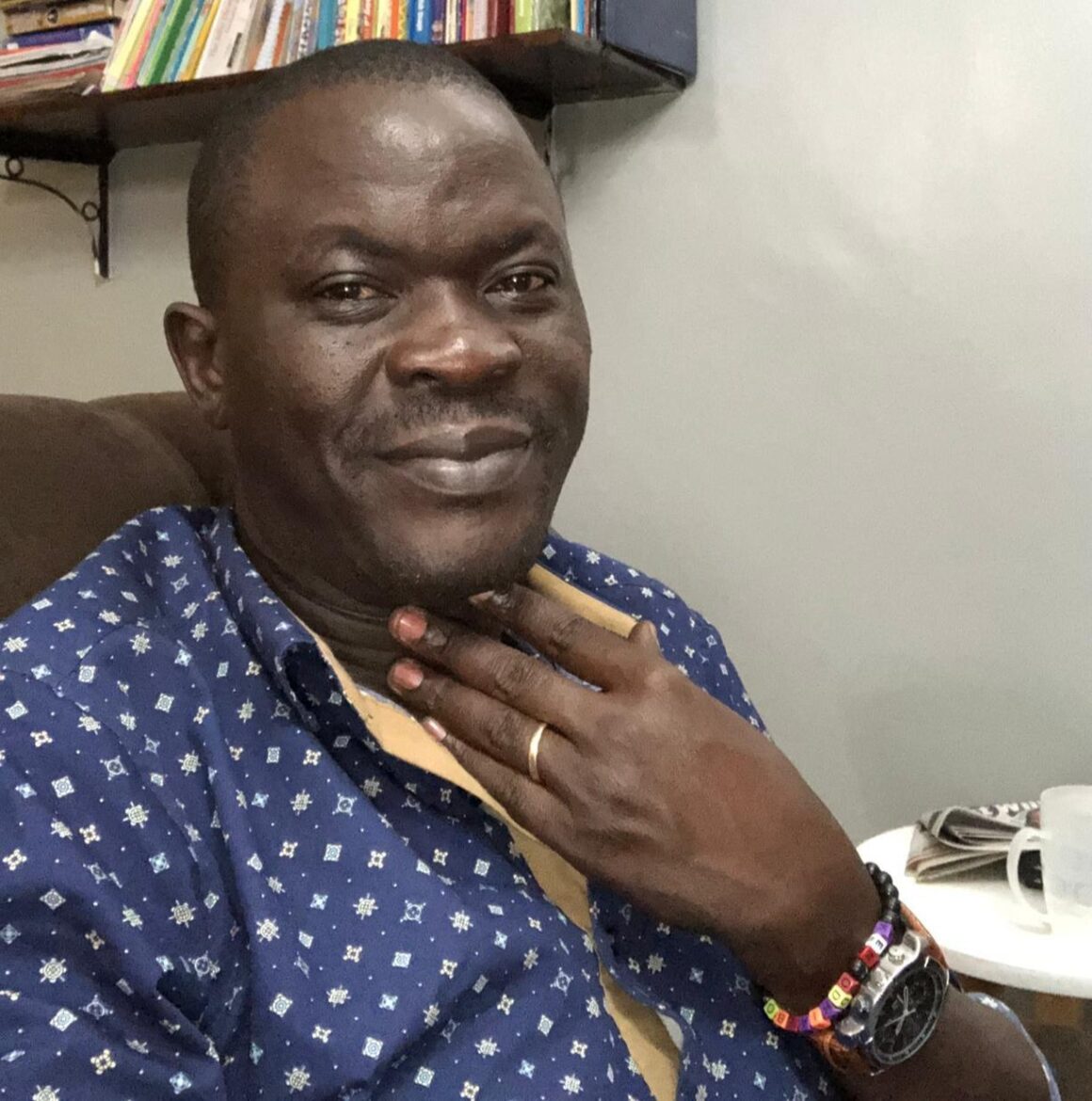
Photo: Kennedy Odhiambo
San Francisco, 02/02/2026
By Kennedy Odhiambo Onjweru
On January 19, 2026, President Salva Kiir appointed Ezekiel Lol Gatkuoth and Sarah Nyanath Elijiah Yong as the new Ministers of Public Service and Human Resource Development, and Culture, Museums, and National Heritage (respectively) in the Transitional Government of the Republic of South Sudan. Their appointments did not come as a surprise, considering that the two have recently emerged as the most outspoken critics of the incarcerated First Vice President, Dr. Riak Machar Teny Dhurgon. The return of Gatkuoth and Nyanath to the government makes the two individuals among the most senior politicians from the Nuer ethnic community on President Kiir’s side of the Government, and, of course, in the cabinet. The appointments also come at a time when Kiir’s leadership is facing a severe, rapidly deteriorating security crisis with intensified fighting between government forces and opposition groups, particularly in Jonglei, Upper Nile, Unity and Eastern Equatoria states.
Following opposition gains, in recent fighting, both Gatkuoth and Nyanath have been leading relentless social media campaign supporting the SSPDF’s operation to “crush the rebellion” offensive, something that perhaps has earned them a reward for appointments. The campaign has been seen to be in line with government threats of violence against Nuer community as conveyed earlier in the January by General Johnson Olony, the deputy Chief of General Staff of SSPDF who was reported by BBC directing troops to exterminate Nuer population in Jonglei State. Could the appointment be considered as a reward of “Dancing on the grave of the dead?”
Nyanath and Gatkuoth have both previously served in government at various capacities with the latter serving in the most lucrative Ministry of Petroleum that accounts for over 98% of the government’s budget and more than 90% of total income. His appointment in 2016 came at a time when he and Taban Deng led a coup against Dr. Machar from SPLM-IO following intense fighting in Juba. Dr. Riek Machar went into hiding following the “Battle of Juba” in July 2016. The faction of SPLM-IO members that remained in Juba, led by Taban Deng Gai, quickly nominated Gai to replace Dr. Machar as the First Vice President even though Gai was seen as someone who did not command a lot of control or support over the SPLM-IO forces. Ezekial Gatkuoth played a key role in convincing IGAD-plus (Intergovernmental Authority on Development) countries, the Joint Monitoring and Evaluation Commission and other international bodies to accept Gai’s nomination.
The appointments of Nyanath and Gatkuoth follow a trend where ministers and senior officials serving in the government in many African nations practicing “violent kleptocracy” are heavily influenced by loyalty to the presidents and political patronage, rather than solely on merit or technical expertise. This practice is used to secure the president’s hold on power by rewarding political loyalists, and mitigating the risk of revolts. The Ministry of Public Service and Human Resource Development could be a pivotal government institution responsible for managing, developing, and optimizing the human resources within the public sector in South Sdan just as Ezekiel Gatkuoth reiterated during his welcoming ceremony at the Ministry Headquarters in Juba. But what is he likely to deliver in a country where essential civil servants, including teachers, health workers, and security forces, go for close to a year without salaries? In fact, some diplomatic missions are facing 35-month salary delays.
At the same time, Sarah Nyanath is equally in her highest spirits praising the President and promising to construct standard museums never seen in Africa. I wonder which country prioritizes museums when the citizens in the capital Juba still drink dirty water direct from River Nile. Are we talking about museums to keep the bones and skeletons of thousands of people who are dying daily of anger, diseases and war? Across the nations, ministries of culture play key role in building peace within divided communities by leveraging cultural heritage, arts, and education to foster social cohesion, mutual understanding, and reconciliation. Before Sarah Nyanath promises South Sudanese with construction of best museums ever, can she assure her own community, the Nuer, and the country at large that from now she will be a peace ambassador within Kiir’s cabinet; and that she will henceforth be championing unity of purpose rather than spreading propaganda?
There is no honor in a government that appoints you to fight back your own people. If you find yourself serving in such a government, it because you are serving your own interest or the interest of the appointing authority but not people. The fact that you cannot convince your community to support the government is itself a proof that no one recognizes your leadership. Nyanath and Gatkuoth know it very well that in Kiir’s Government people start preparing for their dismissal/exit immediately they are appointed. If the leaders from Upper Nile that Kiir has been appointing in the government were truly pro-people, the region would not be engulfed in ever-ending (anti-government) conflict 20 years after the declaration of self-rule of South Sudan. The conflict is a manifestation that the people serving in the government have little or no capacity to engage with their communities to bring lasting peace through community-government collaboration.
Most of the top Nuer politicians in Kiir Government are Juba based, with little connection and knowledge to the realities affecting poor people in the villages. When they are appointed they chatter private planes to their communities, mobilize a few people to receive and validate them, give a small handouts and fly back to Juba with photos to show the president and share in the media for their families and relatives in diasporas to see and from there, their business with their community is finished. As a result, President Kiir has mastered the art of short term recycling (use and dump). Despite being the oil producing region earning government 90% of its total revenue, Upper Nile remains one of the most impoverished and conflict-affected regions in country, with severe food insecurity, recurring floods, and massive displacement, placing several of its counties at high risk of famine. Yet, leaders are accused of syphoning and stashing abroad billions of petro-dollars. According to Transparency International’s 2024 Corruption Perceptions Index (CPI), South Sudan is perceived as the most corrupt country in the world.
As Nyanath and Gatkuoth continue to celebrate their reappointment to the government, the government they have selfishly defended, they should know that the beautiful honor and respect one can get in serving in the government is when that government meets its fundamental obligations to provide national security, protect citizens’ welfare, uphold the rule of law, and manage the economy. I believe majority of people in Upper Nile would be proud if their sons and daughters are appointed in the government that maintains order, protects their individual rights, and ensures the delivery of essential public services like infrastructure, education, and healthcare.
Disclaimer:
The opinions expressed in the preceding article represent the individual viewpoint of the author and do not reflect the official position, editorial stance, or views of Savanna Radio. Our platform is committed to presenting diverse perspectives for public discourse.














Post comments (0)