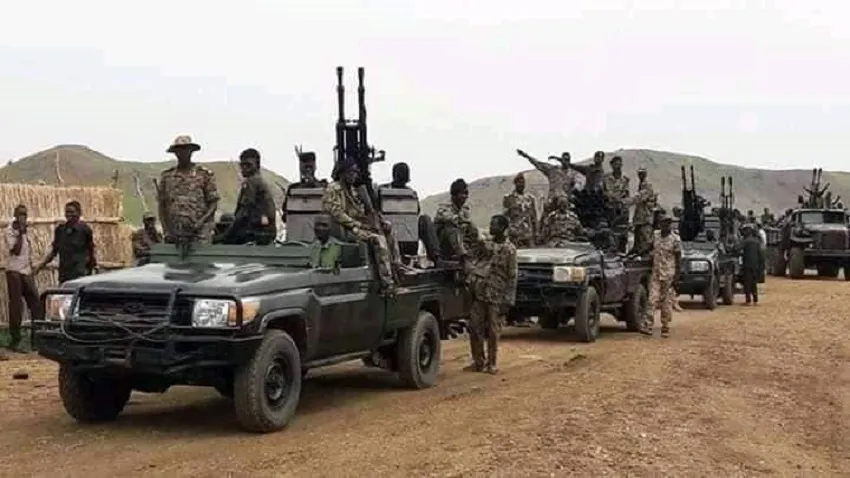
SSPDF (Courtesy)
Juba, January 24, 2026
By Savanna Radio Editorial Team
South Sudan is facing a sharp escalation in tensions between government forces of the South Sudan People’s Defence Forces (SSPDF) and opposition forces of the SPLM/A‑IO, particularly in Jonglei State and parts of Upper Nile, raising the spectre of a return to full‑scale war. Recent months have seen an upsurge in direct clashes between SSPDF and SPLM/A‑IO units in Jonglei, especially in Nyirol, Uror, and surrounding areas, with each side accusing the other of violating the permanent ceasefire under the 2018 peace deal. Ceasefire monitoring teams recorded dozens of alleged violations in late 2025.
Independent monitors and church media report that airstrikes and ground operations in and around border areas between Jonglei and Upper Nile, including Ulang, Nasir and Lankien, have caused civilian deaths and displacement as fighting intensifies. Humanitarian actors warn that renewed hostilities in Jonglei, already one of the most fragile states, are disrupting aid operations and forcing families to flee for the second or third time in a decade.
The SPLM/A‑IO has publicly accused the SSPDF Chief of Defence Forces, Gen. Paul Nang, of using inflammatory tribal rhetoric in recent speeches to mobilise sections of the Bor community against opposition forces operating in Jonglei. In a statement issued in late January, SPLA‑IO spokesperson Col. Lam Paul Gabriel alleged that the army chief invoked memories of the 1991 and 2013 conflicts to rally support, language the opposition describes as an attempt to frame the current confrontation in ethnic terms.
The same statement claims that SSPDF commanders drawn from specific communities are being deployed into sensitive theatres of operation in Jonglei and Upper Nile, deepening perceptions that the conflict is sliding into communal targeting rather than remaining a purely political or military contest. SPLM/A‑IO’s acting chief of staff, Lt. Gen. Peter Thok Chuol Luak, has urged civilians to stay away from SSPDF installations and called on government soldiers to reject what he termed the politicisation of ethnicity inside the national army.
The current tensions are unfolding against the backdrop of a stalled implementation of the 2018 Revitalised Agreement on the Resolution of the Conflict in South Sudan (R‑ARCSS), whose timelines for security reforms and elections have already been extended multiple times. The Reconstituted Joint Monitoring and Evaluation Commission (RJMEC) reports that political and security conditions deteriorated significantly in the second half of 2025, with a spike in ceasefire violations involving both SSPDF and SPLM‑IO. Ceasefire monitors documented at least 76 alleged violations in December alone, most of them in Upper Nile and north‑eastern Jonglei, and concluded that the permanent ceasefire “is currently not holding” in these regions. A UN‑mandated commission has warned that deliberate undermining of the peace deal through renewed fighting, aerial bombardments and restrictions on humanitarian access is putting civilians at grave risk and eroding what remains of the transitional arrangements.
Analysts note that clashes in Jonglei and Upper Nile are part of a broader, dangerous pattern: a fragmented security landscape, increasing autonomy of local militias, and a national political process that has lost credibility as the country edges toward planned elections. Regional conflict trackers warn that, as of early 2026, South Sudan is drifting toward a higher‑intensity civil war marked less by a single front line and more by overlapping local wars, cross‑border interventions and competing centres of armed power. If the current spike in hostilities between the SSPDF and SPLM/A‑IO in Jonglei is not contained, it could draw in aligned militias, armed youth and community defence groups from neighbouring states, transforming isolated clashes into a broader confrontation. Such an escalation would likely derail preparations for the planned 2026 elections, further delay the unification of forces, and deepen mistrust between President Salva Kiir’s camp and opposition factions led by First Vice President Riek Machar.
International monitors, church leaders and regional diplomats are urging immediate steps to de‑escalate fighting in Jonglei, including renewed political dialogue between SSPDF and SPLM/A‑IO leadership and the withdrawal of heavy weapons from contested areas. The UN commission has stressed that without a halt to aerial bombardments, ground skirmishes and interference with aid operations, civilians will continue to bear the brunt of a conflict in which front lines shift but impunity remains constant. At community level, elders, women’s groups and youth leaders are calling for restraint and urging both sides not to use historic grievances to justify fresh violence, particularly in ethnically mixed areas of Jonglei and Upper Nile. For many families in Bor, Akobo, Lankien and Nasir, the fear is not just of a return to the dark days of 2013–2016, but of a new kind of war, more fragmented, less predictable, and far harder to end once it fully ignites.












Post comments (0)